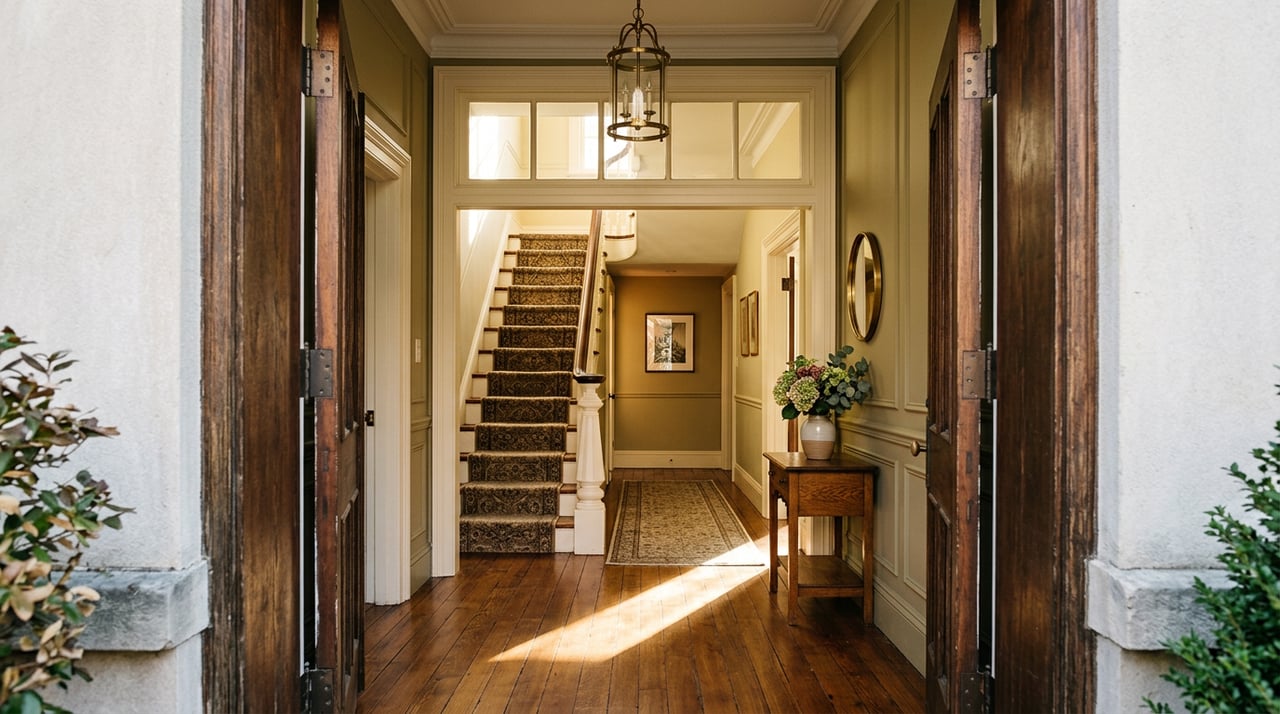
The Renovation Tax Break Shadyside Doesn't Get, and the One It Does
September 10, 2026
Walk down South Aiken or Ellsworth on almost any weekday and you'll see it: a dumpster at the curb, a permit placard taped inside a front window, scaffolding along a Queen Anne turret that's finally getting the attention it needed. Shadyside's housing stock is old enough that this kind of work is less an event than a constant hum, one house at a time, decade after decade.
Pittsburgh has two tax abatement programs for this kind of project, and the enhanced program is available only in neighborhoods specifically named in the city code. Shadyside isn't on that list. W.H. Burkley and Bernstein Law explain how a nearly identical renovation a few miles away in Lower Lawrenceville or Spring Garden can shelter close to seven times more value from taxation, for more than three times as long, using the same underlying law.
That's not a footnote. If you're budgeting a gut renovation before you sell, or pricing a home that already has an abatement attached to it, the gap changes the math.
Both programs trace back to the same state law, the Improvement of Deteriorating Real Property or Areas Tax Exemption Act, known locally as Act 42. The City of Pittsburgh, Allegheny County, and the Pittsburgh School District each adopted their own version, and all 32 city wards, Shadyside included, are treated as eligible "deteriorated neighborhoods" for the base program. That's the good news: every renovated home in the city, regardless of block, qualifies for something.
The base version works like this. City and School District taxes on the value added by a renovation can be abated for three years, up to $36,009. New construction gets a larger cap, $86,750, over the same three years. The county runs its own separate Act 42 program, capped at $66,000, for two years. Stack the city, school, and county pieces together and a standard renovation gets meaningful, but time-limited, relief.
The second version is different in scale, not just percentage. It's called the Act 42 Enhanced Residential Abatement, and it lets City and School District taxes on improvements get abated at 100 percent, up to $250,000, for ten years. That's not a bigger number bolted onto the same program. It's a different program with a different rulebook, and it only applies inside neighborhoods the City Council named specifically in Section 265 of the Pittsburgh Code.
The list of Targeted Growth Zones eligible for the Enhanced abatement includes Allentown, Arlington, Beltzhoover, California-Kirkbride, East Allegheny, Elliott, Esplen, Fineview, Hays, Hazelwood, Homewood North, Homewood South, Homewood West, Knoxville, Larimer, Lincoln-Lemington-Belmar, Lower Lawrenceville, Manchester, Marshall-Shadeland, Mount Oliver, Perry South, Sheraden, Spring Garden, Upper Hill, Upper Lawrenceville, and West End, along with the Uptown and Downtown districts.
Shadyside doesn't appear anywhere on that list. Neither the Enhanced program's ten-year window nor its $250,000 cap is available there under this ordinance. Every renovation project in the neighborhood, no matter how extensive, falls back to the base Act 42 terms: three years, capped at $36,009.
The table below compares the terms of the two programs.
| Standard Act 42 (citywide, includes Shadyside) | Enhanced Act 42 (Targeted Growth Zones only) | |
|---|---|---|
| Term (City/School) | 3 years | 10 years |
| Assessed-value cap, renovation | $36,009 | $250,000 |
| Assessed-value cap, new construction | $86,750 | $250,000 |
| County abatement (separate program) | Up to $66,000, 2 years | Not available; county program not part of Enhanced tier |
Take a $180,000 whole-house renovation as an example, the kind of kitchen, bath, and systems overhaul common in Shadyside's older Colonials and rowhouses. Under the standard program, only the first $36,009 of the resulting increase in assessed value gets shielded from City and School District taxes, and only for three years. The remaining increase in assessed value, roughly $144,000 worth, isn't covered by the abatement.
Run that same $180,000 project in a Targeted Growth Zone and the entire increase falls under the $250,000 Enhanced cap. The full value stays shielded from City and School District taxation for a full decade, not three years.
The difference isn't the renovation. It's the address. Two owners can spend the same amount of money improving comparable houses, and one will carry a substantially larger new tax bill while the other won't feel it for ten.
There's a mechanical detail here that trips up more owners than the zone boundaries do. The abatement application, whichever tier applies, has to be filed within 180 days of receiving the initial building permit for the work, not after the work is finished.
Most owners think about the tax paperwork the way they think about a certificate of occupancy: something to handle once construction wraps up. By then, the 180-day window from the original permit has often already closed. If you're planning a renovation in Shadyside and intend to claim even the standard abatement, the application needs to go in shortly after the permit is pulled, not after the punch list is done.
The abatement travels with the property, not the person who applied for it. A buyer who purchases a home mid-abatement inherits whatever years remain on that three-year window.
That has two practical effects for anyone selling. First, a Shadyside listing with an active abatement is offering a buyer a maximum of three years of protected assessed value, a materially shorter runway than a comparable listing in a Targeted Growth Zone with up to a decade left. Second, timing matters. A home listed just after the abatement expires can surprise a buyer with a tax jump that wasn't priced into their offer. Sellers who understand exactly where their renovation sits in that three-year window, and buyers who ask about it before making an offer, are working from the same information instead of discovering it at closing.
If I miss the 180-day window, can I apply later? No. The deadline is tied to the date the initial building permit was issued, not the completion date.
Does this affect my county tax bill too? The county runs a separate Act 42 program, capped at $66,000 over two years, and it applies regardless of Targeted Growth Zone status. The Enhanced ten-year, $250,000 tier is a City and School District program only.
If I sell before the abatement expires, do I lose it? No. The remaining term transfers to the buyer along with the property.
Renovation math in Shadyside is different from renovation math three miles away, and the difference isn't about the quality of the work. It's about a boundary line drawn in city code. If you're weighing a major renovation before listing, or you're looking at a home that already carries an abatement, it's worth knowing exactly which tier applies before you commit to a budget or a price. That's the kind of detail I walk through with clients before either decision gets made. If you're thinking through a renovation, a sale, or both, Alisha Schweiger is a good place to start the conversation. Let's Connect.
This article is general information, not legal, tax or financial advice. Consult a qualified professional about your situation.
Stay up to date on the latest real estate trends.
O'Hara Real Estate
Get assistance on determining current property value, crafting a competitive offer, writing and negotiating a contract, and much more. Let me guide you through your home-buying journey.

ALISHA SCHWEIGER
Brokerage Name: REMAX Select Realty
Brokerage Phone Number: (724) 933-6300
300 Chapel Harbor Drive Suite 101 Pittsburgh, PA 15238