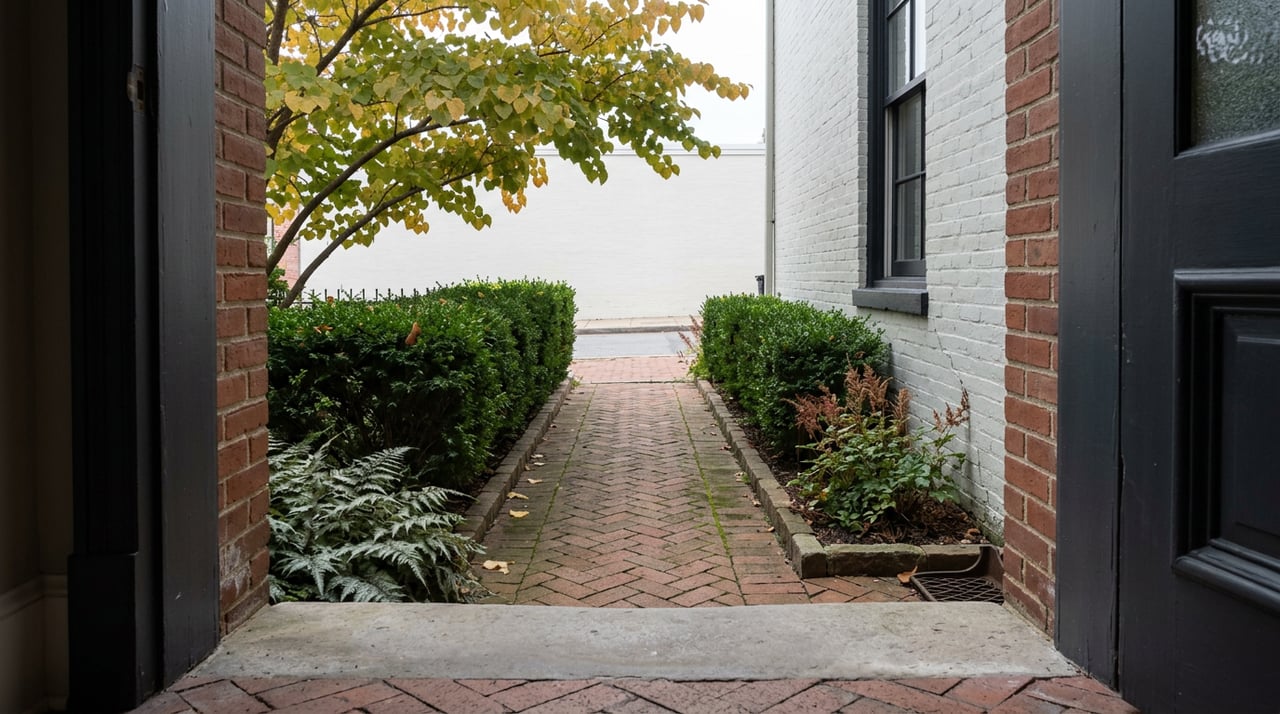
Shadyside Looks Protected. Almost None of It Legally Is.
August 27, 2026
August 27, 2026
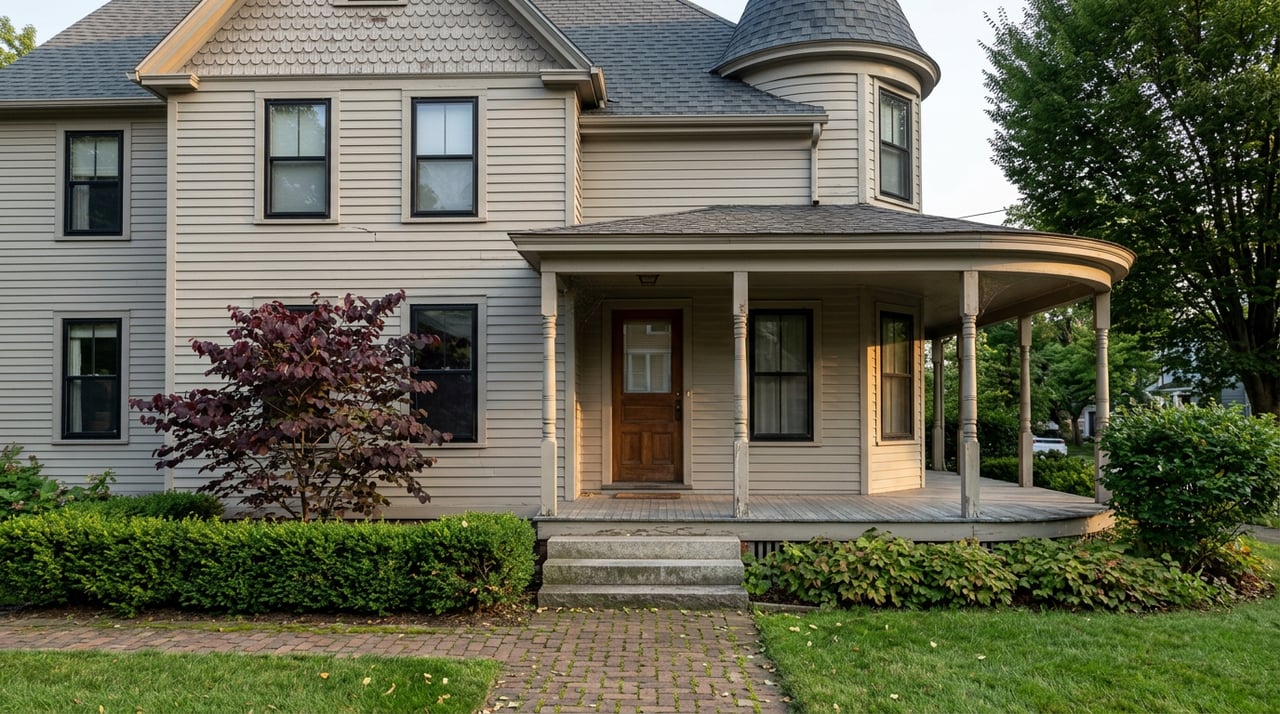
Virginia Flaherty was walking her dog on Emerson Street when she noticed the notice. It was taped to a fence outside 6111 Walnut Street, a mansard-roofed Victorian with dormers, a wraparound porch, and a turret that had stood for more than a century. The paper announced a Zoning Board of Adjustment hearing. The property owner wanted to tear the house down and build a six-unit apartment building in its place.
Flaherty had known the owner for twenty years. He asked her not to oppose the plan. She did anyway, and she wasn't alone. But here's the part that should matter to anyone buying or selling near a large lot in Shadyside: nobody organized a meeting before that hearing. There was no sit-down where the developer walked neighbors through the drawings, took questions, adjusted the plan. The first time residents saw what was proposed for their block was in a Zoning Board hearing room, after the decision had already started moving through the system.
That's not an oversight. It's the current condition of the neighborhood, and it has been since March 2023, when the Shadyside Action Coalition shut its doors after fifty years of doing exactly the job Flaherty needed done.
In 2018, Pittsburgh passed an ordinance requiring neighborhood groups to register as official Registered Community Organizations, or RCOs, to hold a formal seat at the table on zoning matters. Once registered, an RCO is charged with organizing a community meeting before a developer's case reaches the Zoning Board. Squirrel Hill has the Squirrel Hill Urban Coalition. Point Breeze has the Point Breeze Organization and Point Breeze North Community Development Corporation. East Liberty has the Village Collaborative. Homewood has its own Community Development Collaborative. In each of those neighborhoods, a developer proposing something significant has to sit across a table from residents before the zoning hearing, not just after the sign goes up.
Shadyside had the Action Coalition doing that job since 1973, back when sixty members once showed up to a school board meeting carrying empty bushel baskets, promising to fill them with trash and dead rats if a vacant lot wasn't cleaned up. That kind of organizing built the Village of Shadyside. But by 2023, the group's own board described itself as essentially four people carrying the responsibility, and the blame, for a much larger neighborhood. They tried to recruit more volunteers. They met with their City Council representative to brainstorm. It didn't hold, and the coalition retired itself, with its founders publicly hoping someone else would pick up the work.
Nobody had, formally, as of this writing. A new group, the Shadyside Community Partnership, is now actively pursuing nonprofit status and RCO recognition, which would eventually restore that structured early-warning function. But pursuing recognition and holding it are different things, and buyers evaluating a property today shouldn't assume the gap is already closed.
The clearest example of what this means in practice isn't 6111 Walnut. It's the corner of South Aiken Avenue and Claybourne Street, across from UPMC Shadyside.
In 2021, Mozart Management and Camp Eight Capital proposed tearing down two Victorian rental houses on that corner to build a twelve-story, 131-unit apartment complex, designed by Indovina Associates Architects. The site sits in a zoning district capped at 85 feet, so the project needed a stack of variances from the Zoning Board just to exist at the proposed scale. Residents organized opposition, and in 2022 the Zoning Board rejected the request.
The developer didn't walk away. It came back smaller.
| Original proposal (2021-2022) | Revised proposal (2022-2023) | |
|---|---|---|
| Height | 132 feet, 12 stories | 108 feet, 10 stories |
| Units | 131 | 117 |
| Parking spaces | 101 | 82 |
| Affordable units | 13 at 60% AMI | 10% of units at 80% AMI |
The Zoning Board approved the revised plan in March 2023. A Shadyside resident appealed the decision to the Allegheny County Court of Common Pleas. That legal fight didn't resolve until the summer of 2025, when a judge quashed the appeal. Mozart then filed its own lawsuit against the resident, alleging the appeal process had cost the company money. A Public Source report from April 2026 found the project back in front of the City Planning Commission, moving toward a vote after roughly five years in the pipeline.
Compare that to 6111 Walnut. Same missing structure, same lack of an organized pre-hearing meeting, but a different outcome: the Zoning Board rejected that demolition request in November 2024, and the Victorian is still standing.
Two similar situations, two different results, and the only throughline is that in both cases, residents were finding out through posted notices and word of mouth rather than through any organization obligated to tell them in advance.
Here's the misread I hear most often from buyers touring Shadyside: they see the turrets, the wraparound porches, the hundred-year-old brick, and they assume that character comes with legal teeth. It mostly doesn't.
Only one small pocket of Shadyside carries the kind of formal protection that requires a Certificate of Appropriateness before any exterior change: Roslyn Place, the short wooden-block cul-de-sac off Ellsworth Avenue, listed as a National Register historic district in the late 2010s and covering ten residential resources on that 250-foot street. A nearby stretch called Colonial Place carries its own historic recognition too. Outside those two small pockets, the grand Victorian mansions on the avenues that make Shadyside look the way it does in every listing photo have no Historic Review Commission oversight at all.
One contractor who restores Shadyside homes for a living put it plainly: exterior changes draw scrutiny from neighbors and can affect resale, but that scrutiny is social, not legal. No commission has to approve a demolition permit on the basis of architectural character. The Aiken Avenue site proves the point. Two Victorian rental homes, unprotected by anything but their own age, came within a scaled-back proposal of becoming a ten-story building.
If you're looking at a property near a larger lot, a corner assemblage, or a site currently used as multi-unit rental housing, the Victorian streetscape around it tells you almost nothing about what can legally happen there. A few concrete steps matter more than curb appeal:
None of this means Shadyside is at risk of losing what makes it Shadyside. The Zoning Board rejected the original twelve-story plan on Aiken and rejected the Walnut Street demolition entirely. The process works, sometimes in the resident's favor. But it works case by case, hearing by hearing, without the standing structure that neighbors in Squirrel Hill or Point Breeze can lean on. Knowing that before you close changes how carefully you should look, not how much you should worry.
Does Shadyside have a historic district that protects its old homes? Only Roslyn Place carries the formal Certificate of Appropriateness requirement. Nearby Colonial Place carries its own historic recognition too, but outside those two small pockets, Shadyside's Victorian streets have no Historic Review Commission oversight on exterior changes or demolition.
Is there a group I can contact before buying near a development site? The Shadyside Community Partnership is currently pursuing nonprofit and Registered Community Organization status, but it hasn't held that formal recognition the way the old Shadyside Action Coalition did before 2023. Confirm current status before assuming a community meeting requirement is in place.
What happened with the South Aiken Avenue project? After a court appeal was quashed in the summer of 2025, the scaled-back 117-unit, 10-story proposal was reported in April 2026 to be headed toward a Planning Commission vote, following roughly five years of revisions since the original 2021 filing.
How do I find out if a nearby property has an active zoning case? Check the City of Pittsburgh's Zoning Board of Adjustment and Planning Commission agendas directly, and watch for hearing notices posted on the property itself. In a neighborhood without a standing community organization, those are your most dependable sources.
If you're weighing a purchase near a larger lot in Shadyside, or you're selling a property where a neighboring parcel has development potential, I'd rather walk the block with you before you write an offer than have either of us learn something at closing that a little research could have caught earlier. That's the kind of groundwork Alisha Schweiger has built her practice on, thirty years of construction background paired with eighteen years of transactions across these East End streets. Let's Connect.
Stay up to date on the latest real estate trends.
Get assistance on determining current property value, crafting a competitive offer, writing and negotiating a contract, and much more. Let me guide you through your home-buying journey.

ALISHA SCHWEIGER
5501 Baum Blvd Pittsburgh, PA 15232