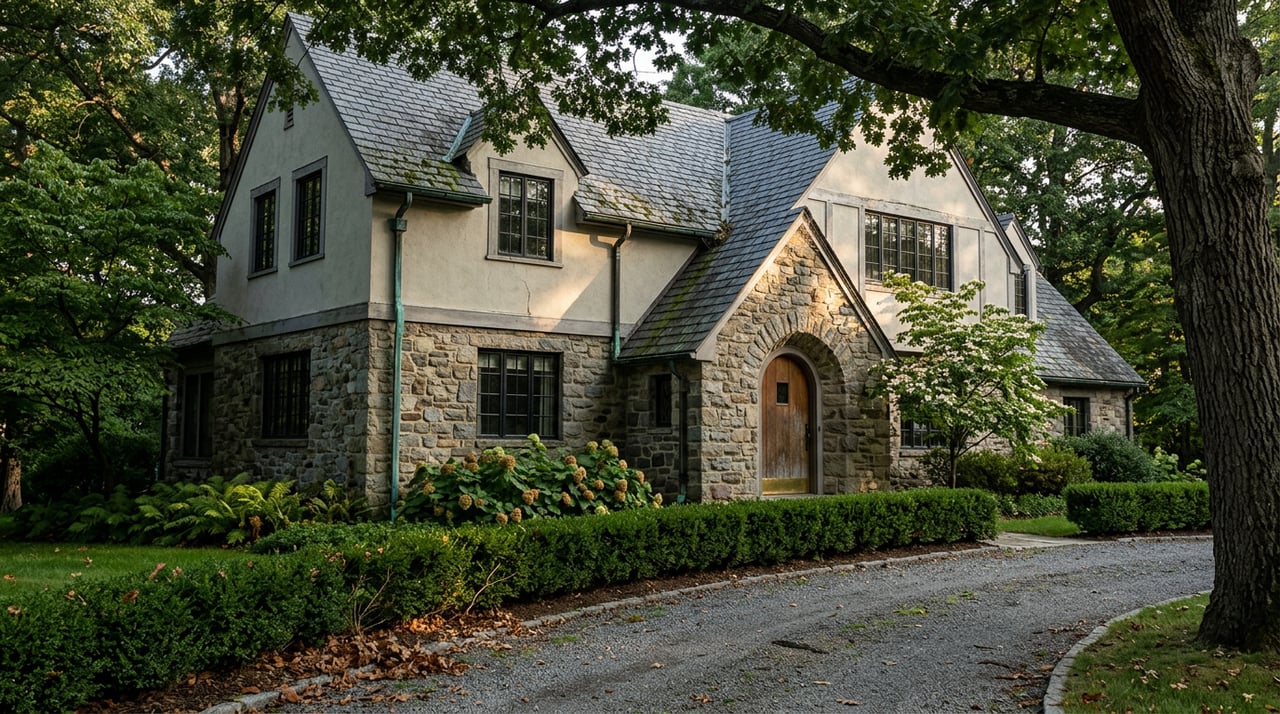
The Real Reason Fox Chapel Homes Take Longer to Sell
August 13, 2026
August 13, 2026
I was walking a client through a home off Squaw Run Road last spring when her buyer's inspector knelt down in the side yard, popped the cap off a well casing, and asked a question she couldn't answer: when was this last tested, and by whom. She'd lived in the house for eleven years. She had no idea. That single question added three weeks to what should have been a straightforward closing.
That moment is the real story behind Fox Chapel's slow-moving market, and it has almost nothing to do with price.
In June 2026, homes listed in Fox Chapel spent a median of 202 days on the market, unchanged from the same month a year earlier, with a median list price of $1.82 million and $341 per square foot. Across the broader Pittsburgh region, a trailing twelve-month view through early 2026 put Fox Chapel's luxury tier at roughly 62 days on market against a metro-wide average closer to 42. Most sellers assume that gap is about buyers balking at the number on the sign. It isn't. It's about what happens after the offer, when private infrastructure that never shows up in a listing photo starts generating paperwork.
Fox Chapel's housing stock is defined by wooded, roughly acre-sized lots built mostly between the 1930s and 1980s, and a meaningful share of those larger properties sit on private roads rather than borough-maintained ones. Add in the septic systems and private wells that predate the borough's later sewer and water extensions, and you have three separate systems, each with its own disclosure trail, that a buyer's lender will want documented before anyone gets to a closing table.
None of these are defects. They're simply not questions a buyer in a public-utility neighborhood ever has to ask, which means sellers here are often the first to realize how much documentation they're missing.
| Step in a typical Pittsburgh-area sale | What it looks like in Fox Chapel |
|---|---|
| Confirm water and sewer utility accounts | Confirm well test history and septic pump-out records, since public isn't a given |
| Standard home inspection | Standard inspection plus a separate septic evaluation, often 2 to 4 hours on its own |
| Review HOA documents, if any | Locate the private road maintenance agreement, even where no formal HOA exists |
| Disclose known material defects | Disclose defects and disclose your own level of construction or engineering expertise |
That last row surprises almost every seller I work with, and it's worth sitting with.
Most sellers assume that knowing more about their house protects them. Pennsylvania's Real Estate Seller Disclosure Law works the other way. Under 68 Pa.C.S. § 7304, the statute requires sellers to disclose their own level of relevant expertise in areas like engineering, architecture, and construction, and that disclosure changes how much you're expected to have known.
A seller with no construction background who missed a slow leak behind a wall has a reasonable defense. A seller who spent thirty years in the trades, or who did the renovation themselves, doesn't get the same benefit of the doubt. The law holds you to what someone with your training would have caught.
I bring this up because it cuts close to home. I've spent more than thirty years running a custom construction and renovation company with my husband, and that background is exactly why I walk a Fox Chapel listing looking for the things a buyer's inspector will eventually find anyway: the well cap nobody's opened in a decade, the septic riser buried under mulch, the shared driveway agreement filed away in a drawer somewhere. Finding those things before a buyer's inspector does isn't just tidy. Under Pennsylvania's disclosure law, it's the difference between a seller who's exposed and one who isn't.
The official Seller's Property Disclosure Statement asks directly about water supply and sewage systems, and it asks whether unpaid assessments or shared maintenance obligations exist. A seller who's already gathered that paperwork walks into a listing with far less exposure than one who's counting on "I didn't know" to cover a gap.
Here's the part that changes how you should think about timing. That slow median isn't a signal to price lower. It's a signal that the properties selling fastest in this window are the ones where sellers front-loaded the paperwork buyers eventually demand anyway.
A pre-listing well test costs a fraction of what a failed test costs you in renegotiation leverage three weeks into a signed agreement. A septic evaluation done proactively, even where your township doesn't require one, means you're the one deciding whether to fix a problem rather than a buyer's attorney deciding for you. And having a copy of your private road maintenance agreement ready before a title company asks for it removes one more item from the list of things that can stall a closing in week six instead of week one.
None of this shortens the search for the right buyer. Fox Chapel's estates are genuinely one of a kind, and finding the household who wants a specific lot, a specific layout, a specific stretch of wooded privacy, takes the time it takes. But once that buyer is under contract, the paperwork you've already assembled is what keeps the next 60 days from becoming another 140.
Does Fox Chapel require a septic inspection before closing? The borough doesn't mandate one at the state level, and Pennsylvania leaves that decision to individual municipalities. Even where it isn't required, most buyers using FHA or VA financing will need one anyway, so a pre-listing inspection tends to save time rather than add to it.
Am I required to test my well before selling? No. Testing is not legally required, but for non-public water sources, the disclosure form asks for your most recent results. Buyers and lenders both tend to expect a test regardless of what the law requires.
What if I don't have a copy of my private road agreement? Start with your title company or the neighbors who share the road. These agreements are often recorded with the deed, and having a copy ready before a buyer asks removes one more potential delay from the closing timeline.
If you're weighing a Fox Chapel sale and want an honest read on what your specific property will need before it hits the market, Alisha Schweiger has spent decades on both sides of this, as a construction professional and as the agent who knows exactly which questions a buyer's inspector is going to ask first. Let's Connect.
Stay up to date on the latest real estate trends.

Get assistance on determining current property value, crafting a competitive offer, writing and negotiating a contract, and much more. Let me guide you through your home-buying journey.

ALISHA SCHWEIGER
5501 Baum Blvd Pittsburgh, PA 15232