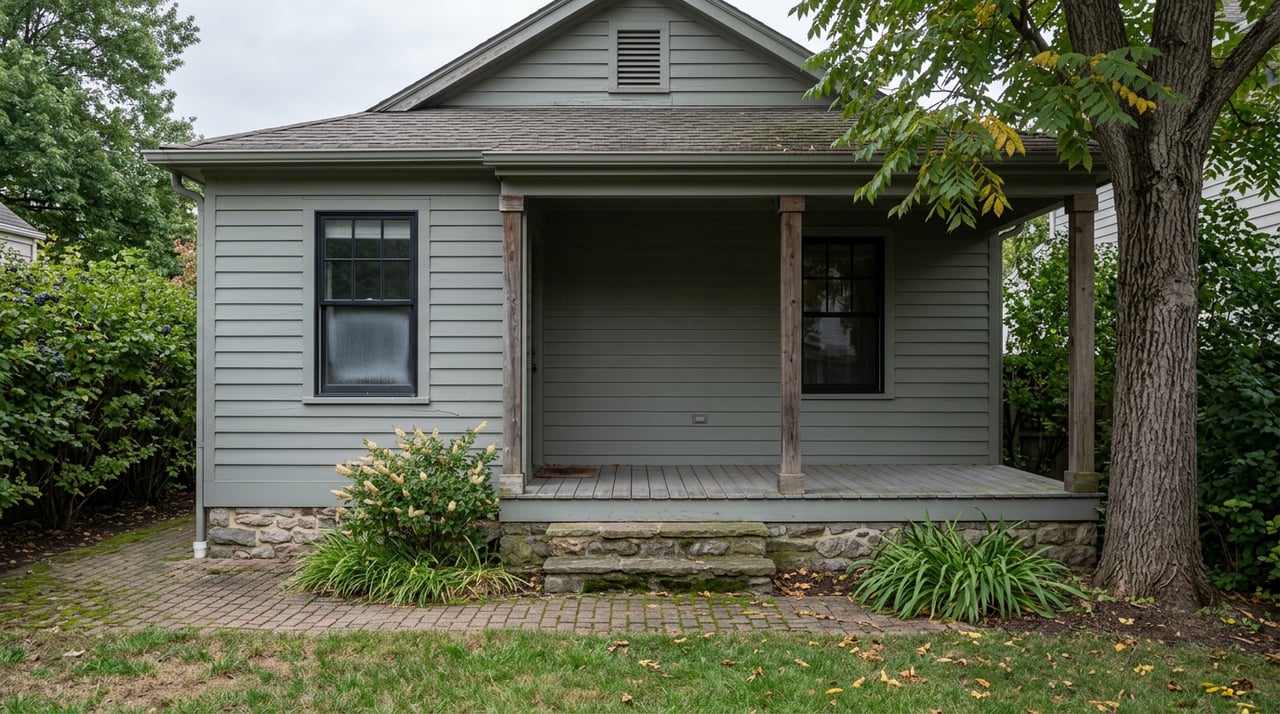
The Paperwork That Can Stall Your Aspinwall Closing Before Any Buyer Ever Shows Up
August 20, 2026
August 20, 2026
It is unlawful for any person to sell or transfer real property within the Borough on which a building or improvement exists without first delivering to the purchaser or transferee a certificate of compliance.
That's not a clause buried in a mortgage document. It's Aspinwall Borough's own municipal code, and it means something most sellers don't find out until they're already under contract: the thing most likely to slow down your closing isn't the buyer's home inspector. It's the Borough itself.
Aspinwall is one of the smaller number of Allegheny County municipalities that requires three separate pieces of sale-time paperwork before a deed can transfer: an occupancy permit, a zoning certification, and a dye test of the property's sewer lateral. Some neighboring boroughs require one of the three. A few require none. Aspinwall requires all three, and its own code makes closing without that certificate of compliance illegal, not just inconvenient.
If you're getting ready to sell a house in Aspinwall, particularly one that predates the Second World War, that combination matters more than the number on the listing agreement.
Allegheny County doesn't have one uniform pre-sale inspection standard. Every borough sets its own, and the differences are wide. A settlement company's county-wide reference sheet lays out exactly how uneven the requirements are:
| Municipality | Occupancy Permit Required | Zoning Certification Required | Dye Test Required |
|---|---|---|---|
| Aspinwall Borough | Yes | Yes | Yes |
| Baldwin Borough | Yes | Yes | Yes |
| Ben Avon Borough | No | No | Yes |
| Bethel Park Borough | No | No | Yes |
| Aleppo Township | Yes | Yes | No |
Ben Avon only asks for a dye test. So does Bethel Park, on the other side of the county. Aspinwall asks for all three, putting it in the same tier as Baldwin Borough rather than the lighter-touch boroughs around it. If you've sold a house in a nearby community before and remember the process being relatively simple, that memory won't hold here.
A dye test isn't a plumbing inspection in the way most people picture one. A licensed plumber introduces a colored dye into the home's downspouts, yard drains, and other stormwater collection points, then checks whether that dye shows up in the sanitary sewer system. If it does, it means rainwater and roof runoff are illegally connected to a line meant to carry sewage only, a common shortcut in homes built long before anyone worried about combined-sewer overflow. Aspinwall's own code defines the test in exactly these terms and gives the Borough the authority to order the connection fixed before a certificate of compliance is issued.
This is where the age of Aspinwall's housing stock stops being a charm point and starts being a logistics problem. The borough has an unusually large share of pre-World War II construction, and homes from that era were often plumbed with cast iron drain stacks and terra cotta clay sewer laterals, materials that were standard practice at the time and are now decades past the point where cracking, root intrusion, and internal corrosion become likely rather than possible. A plumber sent out to run a dye test on a property this old is working on the same pipe that's been quietly handling a century of wastewater, and it isn't unusual for that visit to turn up more than the stormwater connection the test was ordered to check.
Here's the part that catches sellers off guard. The buyer's own home inspector is going to walk through the same list of aging systems, knob-and-tube wiring in the attic, an original cast iron stack in the basement, maybe a panel that's been added to but never fully replaced. Local inspection reports for homes of this era consistently flag exactly this combination. That inspection is a negotiation. You can offer a credit, split the cost of a repair, or simply price the home with the condition reflected up front.
The Borough's dye test isn't a negotiation. If it fails, the illegal connection has to be corrected before the certificate of compliance is issued, and the certificate has to be delivered to the buyer before the deed transfers. There's no splitting the difference with a municipal ordinance. A seller who assumes the home inspection contingency is the only clock running can be blindsided when the Borough's own process turns out to be the longer one.
The homes most likely to hit this wall are the ones with the most character. Aspinwall's Sauer Historic District, a cluster of homes designed and hand-built around 1900 by architect Frederick Sauer, is a good example of what "built to a different standard" actually meant in practice. One owner, describing the poured concrete floors and reinforced steel work Sauer brought over from his church-building work, put it simply: the house is "built like a fortress." That kind of construction has held up remarkably well above ground. What it didn't anticipate was a stormwater ordinance that wouldn't exist for another century.
Pennsylvania's Real Estate Seller Disclosure Law already requires you to tell a buyer about known material defects, structural issues, plumbing problems, and outdated wiring including knob-and-tube. Most sellers know that much. Fewer know about the section of the law that raises the bar specifically for anyone with construction, engineering, or architectural background.
Under Pennsylvania law, a seller's disclosure obligation scales with what they actually know how to notice. A layperson who genuinely didn't recognize a settling crack for what it was has some cover. A seller with hands-on construction experience, or one working closely with a contractor on the sale, doesn't get the same benefit of the doubt. The standard is what someone with that background should have caught, not what an average homeowner would have caught. If you've done your own renovation work, or you're selling alongside someone who has, that's worth knowing before you fill out the form, not after a buyer's attorney points it out.
Does a failed dye test kill an Aspinwall sale? No, but it does require the illegal connection to be corrected and re-tested before the certificate of compliance can be issued, and that certificate has to be in the buyer's hands before the deed transfers.
Can you still sell a home in Aspinwall with knob-and-tube wiring present? Yes. There's no statewide ban on existing knob-and-tube wiring in Pennsylvania. It does need to be disclosed, and some insurance carriers will ask for an electrician's evaluation before writing a policy for the buyer.
Do all Allegheny County boroughs require the same three certifications? No. Requirements vary significantly by municipality. Aspinwall requires all three, while some neighboring communities require only a dye test or none at all.
Should I start the Borough paperwork before or after I have an offer? Before, if you can. Since the certificate of compliance has to be delivered before closing and the underlying inspections can turn up issues that take time to fix, starting early protects the timeline you've already promised a buyer.
Aspinwall's housing stock is part of why people want to live here in the first place. That same age is exactly why the sale-time process deserves attention long before a buyer walks through the door. If you're weighing when to list a century-old Aspinwall home, or you want a clearer read on what your particular property is likely to encounter with the Borough, Alisha Schweiger has spent more than thirty years around the construction side of homes like yours, and would be glad to walk through what to expect before you commit to a timeline. Let's Connect.
Stay up to date on the latest real estate trends.

Get assistance on determining current property value, crafting a competitive offer, writing and negotiating a contract, and much more. Let me guide you through your home-buying journey.

ALISHA SCHWEIGER
5501 Baum Blvd Pittsburgh, PA 15232